Why are lightweight plastic bottles better for eco-shipping? The answer begins with mass. A lighter bottle needs less resin, occupies less shipping weight, and can reduce fuel use across pallets, trucks, and delivery vans. A 500-millilitre bottle with a thinner wall may save only a few grams. Multiply that by thousands of units, and the difference becomes visible: fewer loaded kilograms, fewer emissions, and lower freight costs.
The U.S. Environmental Protection Agency’s WARM model identifies source reduction as a powerful waste-prevention strategy. Franklin Associates’ life-cycle research also shows that PET packaging can have lower energy and greenhouse-gas impacts than heavier alternatives, including glass, when manufacturing and transport are considered. NAPCOR’s industry reports further indicate that recycled PET can significantly reduce emissions compared with virgin PET. The exact result still depends on bottle design, recycling rates, transport distance, and product protection.
Andrew Morlet, CEO of the Ellen MacArthur Foundation, has said, “We need to move from a linear to a circular economy.” That principle matters here. Lightweighting should not mean fragile packaging or higher product waste. A leaking bottle is not sustainable.
This guide examines the best lightweight plastic bottles for eco-shipping in 2026. It considers resin type, recycled content, closure performance, pallet efficiency, and real-world durability. Some assumptions remain imperfect. Local recycling systems differ. Supplier claims also need verification. The most responsible choice is lighter, recyclable, and strong enough to arrive intact.
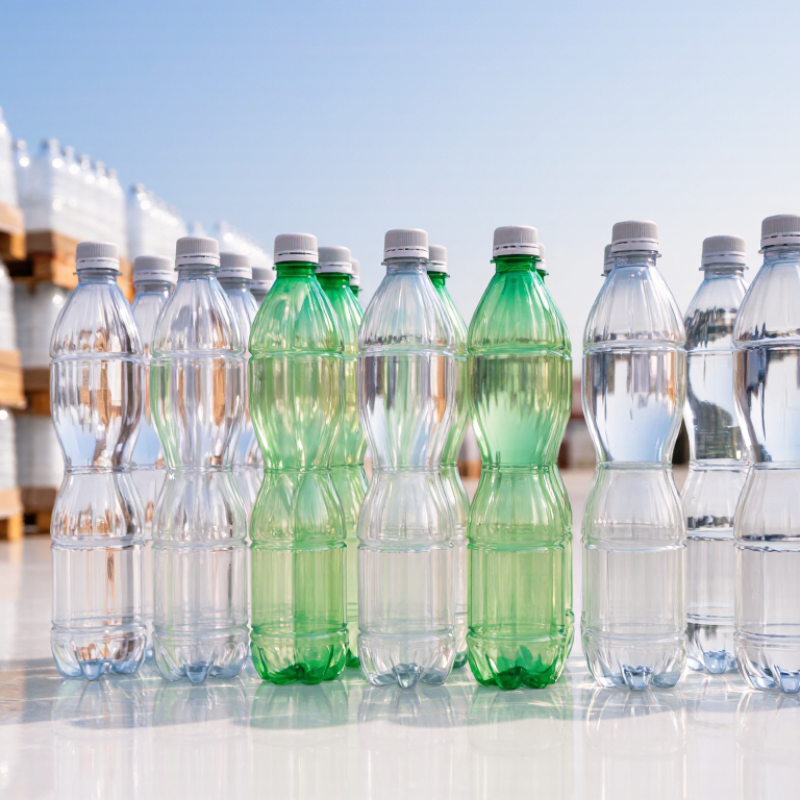
A lightweight plastic bottle uses less material while still protecting its contents during filling, shipping, and handling. Its weight depends on resin type, wall thickness, shape, neck design, and closure size. Engineers often add strength through ribs or curved panels instead of simply adding plastic. A narrow base may reduce material, but it can also make the bottle unstable on a packing line.
In practical packaging evaluations, I look beyond the bottle’s empty weight. A reliable design must survive compression, vibration, drops, temperature changes, and repeated movement in cartons. Small details matter. A secure cap prevents leaks. A consistent wall prevents weak spots. Clear recycling markings can help sorting facilities identify the material correctly. Recycled plastic may lower the use of new resources, although its quality and availability can vary by region.
Lighter is not always greener.
A very thin bottle may deform, need extra packaging, or cause product loss. That weakens its environmental value. I would compare material weight, recycled content, shipping efficiency, durability, and local recycling access together. Basic measurements help: weigh the empty bottle, test filled cartons, and inspect damaged units after transport. The result may challenge expectations. Sometimes a slightly heavier bottle performs better overall, especially when it reduces breakage or uses less protective packaging. Eco-friendly design is therefore a balance, not a single number.
For 2026 eco shipping, material selection matters more than appearance. Most lightweight bottles use polyethylene terephthalate, or PET, because it is clear, strong, and easy to form. A thinner PET wall can reduce resin use and transport weight. However, thinner is not automatically greener. Poor designs may collapse, leak, or require extra protective packaging during delivery.
Recycled PET, known as rPET, can replace part of virgin resin in many bottle formats. The U.S. National Association for PET Container Resources reported a 29.1% PET bottle recycling rate in 2022. That figure shows progress, but also exposes a gap. Collection and sorting still limit reliable recycled feedstock. The OECD’s Global Plastics Outlook found that only 9% of global plastic waste was recycled in 2019. The material loop remains incomplete.
High-density polyethylene offers strong chemical resistance and works well for opaque bottles. Recycled HDPE can support durable shipping formats, although color and odor may restrict some applications. Bio-based polyethylene is another option, but its renewable origin does not guarantee lower total impact. Feedstock, farming, processing, and transport must be assessed together. Closures commonly use polypropylene or HDPE, while labels may use paper or compatible films. I would avoid judging a bottle by one material alone. A lightweight bottle that cannot be efficiently collected may perform worse than a slightly heavier design with dependable recycling access. Real-world handling tests are essential. Sometimes, less plastic creates more damage.
| Bottle Material | Typical Density (g/cm³) |
Lightweighting Potential | Typical Bottle Applications | Recycled-Content Compatibility | Recycling Profile | Key Sustainability Advantages | Main Limitations for Shipping |
|---|---|---|---|---|---|---|---|
| PET (Polyethylene Terephthalate) |
Approximately 1.33–1.40 | Excellent High stiffness-to-weight ratio supports thin-wall bottles. |
Water, beverages, food, personal-care products, and many household liquids. | Can be produced with post-consumer recycled PET, subject to food-contact and local regulatory requirements. | Widely collected and mechanically recycled in many markets; recycling availability varies by region. | Low weight, good clarity, strong impact resistance, and established recycling infrastructure. | Limited resistance to high temperatures and some aggressive chemicals; clear PET is not biodegradable. |
| rPET (Recycled PET) |
Approximately 1.33–1.40 | Excellent Similar lightweighting potential to virgin PET when quality is controlled. |
Water, beverages, personal care, and household products where recycled content is specified. | Made from recycled PET flakes or pellets; the achievable percentage depends on feedstock quality, processing, and end-use rules. | Uses the same PET recycling stream; bottle-to-bottle recycling is possible when collection and processing systems are suitable. | Reduces demand for virgin plastic and keeps used PET in circulation. | Supply, color, odor, contamination, and food-contact compliance can affect performance and cost. |
| HDPE (High-Density Polyethylene) |
Approximately 0.94–0.97 | Very good Lightweight and naturally opaque with strong chemical resistance. |
Milk, cleaning products, shampoo, cosmetics, industrial liquids, and chemical containers. | Can incorporate post-consumer recycled HDPE, with performance depending on grade and application. | Commonly identified as resin code 2; recycling access is strong in some regions but less consistent than collection claims suggest. | Low density, durable walls, good moisture resistance, and strong resistance to many chemicals. | Usually opaque or translucent; lower barrier to oxygen and carbon dioxide than PET without additional design measures. |
| rHDPE (Recycled HDPE) |
Approximately 0.94–0.97 | Very good Retains the low-density benefit of HDPE. |
Household cleaners, personal-care packaging, non-food liquids, and selected food-contact formats. | Compatible with recycled HDPE streams; food-contact use requires appropriate purification and regulatory approval. | Generally recyclable through HDPE collection systems; color mixing can reduce the range of resulting applications. | Reduces virgin resin use and can support closed-loop or near-closed-loop packaging systems. | Recycled resin may have variable color, odor, stiffness, and contamination levels. |
| Bio-based PET | Approximately 1.33–1.40 | Excellent Drop-in PET structure enables conventional lightweight bottle designs. |
Beverages, food, personal care, and other applications normally using PET. | Can be blended with recycled PET where specifications and processing conditions allow. | Has the same material structure and recycling pathway as conventional PET when it is correctly sorted. | Uses renewable feedstock for part of the polymer’s raw-material input while retaining PET performance. | Bio-based does not mean biodegradable; feedstock sourcing and land-use impacts must be evaluated. |
| PP (Polypropylene) |
Approximately 0.90–0.91 | Very good Lowest density among the main bottle plastics listed. |
Caps, closures, hot-fill containers, food packaging, and selected personal-care bottles. | Recycled PP is available, although supply and quality consistency vary by market. | Commonly identified as resin code 5; collection and reprocessing access is less consistent than for PET and HDPE in many regions. | Very low density, good fatigue resistance, and better heat resistance than PET in many designs. | Can have lower clarity and lower gas-barrier performance; recycling access may be limited. |
| PHA (Polyhydroxyalkanoates) |
Approximately 1.20–1.30 Varies by grade |
Moderate Lightweighting depends strongly on formulation and processing. |
Specialty packaging and selected applications designed for controlled end-of-life systems. | Usually not blended directly into conventional PET or HDPE recycling streams. | End-of-life behavior depends on the specific PHA grade and industrial or environmental conditions; local acceptance is limited. | Some grades are designed to biodegrade under defined conditions and can be made from biological feedstocks. | Higher cost, limited infrastructure, and performance variability; “compostable” claims require specific conditions and certification. |
| Material-selection note: For lightweight eco-shipping, PET and rPET generally offer the strongest combination of low weight, stiffness, clarity, and established bottle-recycling pathways. HDPE and rHDPE are strong choices for opaque or chemically demanding products. Actual environmental performance depends on bottle weight, recycled content, transport distance, packaging format, collection rate, recycling yield, and the end-of-life system available in the destination market. Density values are approximate ranges for common commercial grades and are not a substitute for supplier specifications. | |||||||
Lightweight plastic bottles can cut shipping emissions before a truck leaves the warehouse. Bottle design changes the mass carried across every kilometre. The GLEC Framework v3.0 calculates freight emissions using weight, distance, transport mode, and load factor. That method matters.
A 5-gram reduction across 100,000 bottles removes 500 kilograms from one shipment.
It can also reduce pallet strain and create room for more units. Weight still matters. Yet the benefit is not automatic. A fuller truck, not a lighter bottle alone, often determines actual emissions.
Material savings also matter upstream. The OECD Global Plastics Outlook estimates that plastics generated 1.8 gigatonnes of greenhouse gas emissions in 2019. That represented 3.4% of global emissions. Thin-wall molding, shorter neck finishes, and ribbed panels can reduce resin use while preserving stack strength.
Designers should test compression, drop resistance, leak performance, and heat exposure.
Testing exposes weaknesses. A bottle that collapses in transit creates waste, replacements, and extra freight. That reverses the intended gain.
For 2026 shipments, teams should compare grams per bottle, bottles per pallet, and emissions per delivered unit. Use verified life-cycle data, not attractive claims. The European Commission’s Product Environmental Footprint method recommends clear boundaries and transparent assumptions.
Recycled content may lower material impacts, but supply quality can limit availability. Lightweighting can also make sorting harder when labels, caps, or formats become complicated.
The uncomfortable question remains: did the redesign reduce total impact, or only factory weight?
Comparing lightweight bottles starts with the product, not the bottle weight. Water needs basic protection, while oils, sauces, and acidic drinks may require stronger oxygen or light barriers. A thin wall can save resin, but it may collapse during filling, stacking, or delivery. That creates leakage, rejected shipments, and wasted products. The OECD’s Global Plastics Outlook reported 353 million tonnes of plastic waste in 2019, with only 9% recycled. Less material helps, but failed packaging increases the real footprint.
Test each bottle with its actual contents. Measure wall thickness, bottle weight, closure fit, drop resistance, and compression strength. Record results after hot storage and cold transport. For carbonated products, check pressure performance before reducing plastic further. For oils, inspect seal reliability after vibration testing.
The U.S. EPA reported that containers and packaging generated 82.2 million tons of municipal solid waste in 2018, showing why small design gains matter at scale.
Recycled content can improve the result, but supply consistency and food-contact suitability need verification. I have found that laboratory results can look excellent, while a fast filling line exposes weak shoulders or unstable bases. That gap deserves honest review. Lightweight does not mean fragile. It means precisely engineered.
2026 Best Lightweight Plastic Bottles for Eco Shipping?
How to Choose the Best Bottle for Eco-Friendly Shipping
Choosing a lightweight bottle starts with the product, not the package. I look for enough wall strength to prevent dents during stacking and handling. A bottle that feels thin may still perform well, but testing matters more than appearance. Check its empty weight, recycled content, closure fit, and compatibility with the liquid inside. Some lightweight designs need stronger caps or protective cartons. That can reduce the expected environmental benefit.
Tips: Compare total shipping weight, not bottle weight alone. Test filled bottles under vibration, compression, and temperature changes. Measure leakage after repeated drops. Ask for clear material information and recycling guidance. A local testing laboratory can verify claims and reduce guesswork.
Bottle shape also affects shipping efficiency. Straight sides usually stack better and leave less unused space. Narrow shoulders may lower material use, yet they can weaken the neck. Use cartons that hold bottles firmly without excessive padding. Recycled plastic can support a lower-impact design, but its quality may vary between suppliers. Request documented specifications, batch consistency, and food-contact compliance when relevant. I would avoid relying on attractive sustainability language alone. Real shipping conditions are messy. Humidity, rough conveyors, and overfilled cartons can expose flaws that a clean factory test misses. A practical trial with actual routes often reveals more than a polished data sheet.
It uses less resin while protecting the contents. Wall thickness, shape, neck design, and closure size all matter. Curved panels or ribs can add strength without much extra material. Very thin walls may collapse during filling.
No. A fragile bottle may need extra cartons or protective padding. It may also leak and waste the product. I would compare total material, shipping weight, durability, recycled content, and local recycling access. Lighter is not always greener.
Test filled bottles, not empty shells alone. Check compression, vibration, drops, and temperature changes. Inspect cartons after transport. Look for dents, leaks, weak shoulders, and unstable bases. Real routes can reveal problems.
Yes. Straight sides usually stack better and leave less unused space. A narrow base may reduce plastic but create instability. Cartons should hold bottles firmly without excessive padding. Small gaps become expensive across many shipments.
Match the bottle to the product. Oils and acidic liquids may need stronger barriers or seals. Carbonated contents require pressure testing. Check closure fit and leakage after vibration. A bottle can look suitable and still fail quickly.
It can reduce reliance on new resources. Quality and supply may vary between regions and suppliers. Request material specifications, batch information, and relevant food-contact documentation. Recycled content alone does not prove a better result.
Weigh the empty bottle and the filled carton. Measure wall thickness and closure fit. Record drop damage and compression results. Compare total shipping weight, not bottle weight alone. Numbers help, but they do not explain everything.
Rough conveyors, humidity, overfilled cartons, and temperature changes can cause failures. Bottles may deform during stacking or vibration. A clean factory test can miss these conditions. I might overlook a problem without testing the actual route.
Ask for clear material details and recycling guidance. Compare documented performance with practical shipping results. Use a local laboratory when needed. Attractive wording is not enough. I would review failed units honestly, even when the results look disappointing.
Lightweight plastic bottles can support more sustainable shipping by using less material while still providing the strength, protection, and functionality required for different products. Their environmental value depends on factors such as recycled content, recyclable resin, efficient manufacturing, appropriate closures, and designs that avoid unnecessary layers or components. Bottle shape, wall thickness, and packaging compatibility also influence how many units fit into each carton or pallet, directly affecting transportation space, fuel use, and emissions.
Why are lightweight plastic bottles better for eco-shipping? They generally reduce the weight and volume of shipments, helping lower transport-related energy consumption and costs. However, the best option is not always the thinnest bottle. Businesses should compare durability, product compatibility, leak resistance, recyclability, recycled content, filling efficiency, and end-of-life considerations. Selecting a bottle that balances performance with material efficiency can improve shipping sustainability without compromising product safety or customer convenience.
