Choosing the 2026 best airless plastic bottles for skincare actives requires more than attractive packaging. Retinol, L-ascorbic acid, peptides, and botanical antioxidants can degrade through oxygen, light, heat, or repeated contamination. The key question is simple: Why do airless plastic bottles help preserve skincare actives?
Airless systems reduce oxygen exchange after dispensing. Their internal piston or collapsible pouch moves upward as product leaves the container. This limits backflow and reduces the need for open-mouth contact. Dr. Zoe Diana Draelos, a board-certified dermatologist and cosmetic science researcher, has stated, “Airless packaging can help reduce oxidation and contamination during product use.” That practical benefit matters when a consumer opens a bottle twice daily. A narrow actuator can also deliver smaller, cleaner doses.
Industry data supports growing interest in this format. Grand View Research reported continued expansion in the global airless packaging market, driven partly by premium skincare and sensitive formulations. Smithers’ packaging research also identifies product protection and dispensing performance as major innovation priorities. However, market growth does not prove every bottle preserves every active. It only shows increasing demand.
Material choice remains critical. HDPE, PP, and multilayer plastic bottles can offer useful chemical resistance, but formulas behave differently. A vitamin C serum may require stronger oxygen protection than a basic moisturizer. Brands should request compatibility testing, closure-cycle testing, microbial assessments, and stability data. No bottle is magic. Pump failure, poor seals, or excessive headspace can weaken the benefit. The best 2026 options should therefore combine airless mechanics, tested resin compatibility, accurate dosing, and credible evidence—not packaging claims alone.
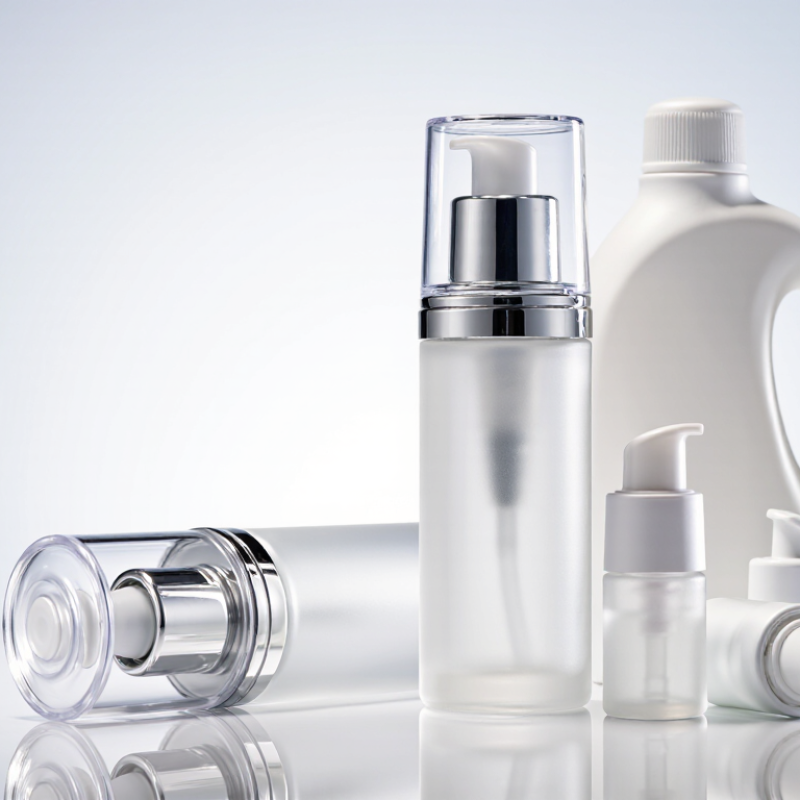
Airless plastic bottles use a sealed inner chamber and a one-way pump. The chamber moves upward as product leaves. This design limits air returning to the formula. It can reduce oxidation, drying, and contamination from repeated finger contact. However, “airless” does not mean sterile. Formulators still need suitable preservation and microbial testing.
Common formats include piston bottles, bag-in-bottle systems, and dual-chamber packs. Piston bottles suit creams, lotions, and gel serums with medium viscosity. Bag systems can handle delicate emulsions while keeping the formula separated from the outer container. Dual-chamber formats release two ingredients together, such as a moisturizer and a freshly mixed active. They need careful dosing control. Small pumps often deliver 0.15 to 0.3 milliliters per stroke, but actual output varies.
In 2026, these bottles are especially useful for retinoid alternatives, vitamin C derivatives, peptides, ceramides, and exfoliating acids. Opaque plastic can further protect light-sensitive formulas. Refillable designs and simplified mono-material structures may improve recycling decisions, although local recycling systems differ. I have seen packaging fail when a thick cream blocked the pump or left too much residue behind. That detail matters. Brands should test viscosity, dose consistency, leakage, chemical compatibility, and evacuation rate under heat and cold. A beautiful package is not enough. User handling changes performance, too. An upside-down bottle may dispense poorly, while a narrow actuator can help prevent excessive dosing.
For active skincare formulas, packaging is part of the preservation strategy, not a decorative choice. Airless plastic bottles use a piston or flexible inner system to push product upward. This design limits the empty space where oxygen can collect. Less oxygen may help slow oxidation in ingredients such as retinoids, vitamin C derivatives, and certain botanical compounds.
The benefit is practical. Each pump delivers a measured dose without requiring fingers to touch the remaining formula. That reduces repeated exposure to dust, water, and microbes. Light matters too. Opaque or UV-resistant plastic can shield sensitive formulas from bathroom lamps and sunlight. A translucent bottle may look attractive, but it can offer weaker protection. Still, “airless” does not mean contamination-proof. Poor closure fit, damaged seals, or a dirty actuator can undermine the system. During packaging checks, I look for smooth pump recovery, consistent dosing, and minimal product trapped near the base. Small failures are revealing.
Material compatibility deserves equal attention. High oil loads, solvents, acids, and fragrances can stress plastics or seals over time. Testing should include heat cycling, leak checks, formula contact studies, and real-use dispensing trials. A bottle that performs well in a laboratory may behave differently beside a steamy sink. I have seen attractive formats waste product when the pump cannot handle a thicker emulsion. That is an easy detail to miss. In practice, the pump must still move that formula after weeks of daily use.
For skincare actives, plastic selection starts with the formula, not the actuator. PE offers strong moisture resistance and useful flexibility, making it practical for creams and emulsions. However, oxygen permeability can remain a concern for oxidation-sensitive ingredients. PP brings higher heat resistance and good chemical stability, but it is not a complete oxygen barrier either. Airless dispensing limits repeated air exchange, yet it does not make the package hermetic.
Multilayer structures can add EVOH or polyamide layers for stronger oxygen protection. They suit fragile actives, especially when oxygen exposure changes colour, odour, or potency. EVOH performance can decline in humid conditions, so layer design matters. The pump, piston, welds, and shoulder also need testing. One weak interface can undermine an excellent barrier film. I would not approve PE or PP from resin data alone. Filled-pack stability testing is essential.
The OECD Global Plastics Outlook reports that packaging represented about 40% of global plastic waste in 2019. PlasticsEurope’s Plastics—the Fast Facts 2023 records packaging as 39.3% of European plastics demand in 2022. These figures strengthen the case for simpler recyclable structures where performance allows. Still, multilayers may protect a high-value active better and reduce product waste. The trade-off is real. My practical preference is PE or PP for stable formulas, with multilayer barriers reserved for proven sensitivity. A recyclable bottle that fails the formula is not a responsible choice.
2026 Best Airless Plastic Bottles for Skincare Actives?
For active skincare, package performance must be measured, not assumed. A 95%+ evacuation rate means the bottle should release at least 95 grams from a 100-gram fill under defined testing conditions. Test ten or more filled units, using the same formula, temperature, and actuator speed. Record the first, middle, and final doses by weight. ISO 8655-6 offers a useful gravimetric framework for checking volumetric dispensing performance, although it was not written specifically for cosmetic bottles.
Dose accuracy matters because a small error can change the user’s routine. Set a target, such as 0.20 grams per actuation, then calculate the average, standard deviation, and highest deviation. A practical screening limit may be ±10%, but tighter targets are preferable for concentrated actives. The Smithers packaging outlook identifies premium skincare as a growing application for high-performance dispensing systems, yet market growth does not prove dosing reliability. It only explains the pressure to test better.
Run the bottle through temperature cycling and repeated actuation. Measure output after 1, 30, 60, and 100 pumps. Thick creams may slow the piston, while low-viscosity serums can mist or leak. I have seen excellent evacuation results fail during the last ten doses. That is the uncomfortable part. One formula, one temperature, and one operator are not enough evidence. Packaging suppliers should provide test records, but brands still need independent verification before approving a 2026 airless plastic bottle.
Benchmark view for assessing product evacuation and dose accuracy across common skincare-active viscosity ranges. A practical screening target is at least 95% product evacuation with dose variation kept within ±10%.
Evacuation rate is the percentage of filled product recovered during dispensing. Dose accuracy is shown as the percentage of dispensed doses falling within ±10% of the nominal dose. Higher values indicate better performance.
For 2026, airless plastic bottles should be selected around the active, not appearance. Retinoids, vitamin C derivatives, peptides, and botanical extracts can react with oxygen, light, or packaging surfaces. ISO 15378 offers a useful quality framework for primary packaging production. It emphasizes documented processes, contamination control, traceability, and risk management. Skincare manufacturers can adapt these principles, even when the product is not medicinal. Good documentation matters.
Compatibility testing must examine the full system. Test the formula inside the bottle, pump, dip tube, and closure. Check color, odor, viscosity, pH, assay, and microbial quality over time. Watch for swelling, cracking, stress whitening, leaking, or dose changes. Elevated temperature testing can reveal failures faster, but it cannot replace real-time aging. Some actives may adsorb onto plastic or lose potency. That detail is easy to miss. PCR targets add another decision layer. Post-consumer recycled content may support sustainability goals, but its consistency, odor profile, barrier performance, and traceability require verification. A recycled resin target should not weaken protection for sensitive formulas. It may also complicate color matching and pump calibration. No test plan is perfect. I would repeat critical checks after transport simulation, because vibration and pressure can expose defects that laboratory storage misses. Selection becomes stronger when quality evidence, compatibility data, and realistic PCR targets are reviewed together.
| Airless Bottle Configuration | Typical Material Structure | Best-Fit Skincare Actives | Main Compatibility Considerations | Recommended Compatibility Test Plan | ISO 15378 Relevance | Practical PCR Direction for 2026 | Selection Assessment |
|---|---|---|---|---|---|---|---|
| Mono-material PP airless bottle with PP piston | Polypropylene bottle, pump components and piston; elastomer seals may remain a separate material. | Retinoids, niacinamide, peptides, vitamin C derivatives, moisturizers and emulsions. | Good resistance to many cosmetic emulsions and water-based formulas. Review stress cracking, pigment or fragrance absorption, and seal compatibility. Oxygen and light protection depend on wall design and decoration. | Fill finished formula and placebo into production-equivalent packs. Test at 5°C, 25°C and 40°C for at least 12 weeks, with longer real-time monitoring. Check appearance, odor, pH, viscosity, assay, impurities, leakage, pump delivery and microbial quality. | Useful when the supplier operates a documented quality system for primary packaging. ISO 15378 addresses GMP principles and risk-based controls for materials used in medicinal-product packaging; it does not replace cosmetic regulatory or formula compatibility testing. | Use verified post-consumer recycled PP where supply and quality are consistent. A 30% PCR-PP target is a practical development benchmark, but the final percentage should be based on color, odor, mechanical performance and traceability. | Strong general option |
| PCR-PP airless bottle with virgin-contact inner layer | Recycled PP in the outer structure with a virgin PP product-contact layer or controlled-contact component. | Active emulsions requiring improved appearance control, including retinol products and antioxidant formulas. | Helps reduce direct contact between formula and recycled resin. Confirm odor, extractables, color migration, batch-to-batch consistency and whether the barrier layer affects recyclability claims. | Compare PCR and virgin controls using the same formula. Add organoleptic testing, extractables screening where justified, color transfer, container-closure integrity and accelerated aging at 40°C/75% RH when appropriate to the product. | ISO 15378-style controls are valuable for recycled-resin traceability, change control, contamination prevention, supplier qualification and documented release criteria. | A 30% PCR target is commonly used as a technical starting point for rigid PP packaging. Higher levels may be possible, but they require validated feedstock quality and may reduce whiteness or increase odor risk. | Best balance of PCR and protection |
| HDPE airless bottle with HDPE piston | High-density polyethylene bottle and piston; pump and seal materials vary by design. | Water-based serums, lotions, gel-creams, niacinamide, panthenol and mild acid products. | Good chemical resistance and toughness. Lower stiffness and different stress-cracking behavior than PP must be considered. Assess fragrance, essential-oil and solvent exposure carefully. | Evaluate mass change, swelling, cracking, leakage and delivery force after storage at 25°C and 40°C. Test with the final formula and a worst-case formula containing fragrance, oils or solvents. | Applicable quality-system principles include material specifications, lot traceability, cleanliness, nonconformance control and change management. Certification alone does not prove compatibility with a specific active. | PCR-HDPE is technically established for rigid packaging, but cosmetic-grade odor, color and contaminant controls are essential. A 30% PCR target is a reasonable initial specification for evaluation. | Robust for many water-based formulas |
| Barrier airless bottle with EVOH or multilayer layer | Polyolefin outer and inner layers with a thin ethylene-vinyl alcohol barrier layer; exact layer design varies. | Oxygen-sensitive vitamin C systems, botanical antioxidants, some retinoid products and formulas requiring extended shelf-life protection. | Improved oxygen barrier compared with standard polyolefin structures, but barrier performance depends strongly on humidity, layer thickness, closures and decoration. Multilayer construction can complicate recycling. | Measure oxygen transmission or use an agreed oxygen-exposure study. Monitor active assay, oxidation impurities, color, odor, viscosity and pump performance at real-time and accelerated conditions. | ISO 15378-aligned documentation can support controlled layer specifications, supplier qualification and change control. The standard does not define a required oxygen-transmission value. | PCR should generally be placed only where it does not compromise the validated product-contact or barrier layer. Confirm whether the complete pack is recyclable in the intended market before making a mono-material claim. | Preferred for oxygen-sensitive formulas |
| Post-consumer recycled PET airless bottle | PCR-PET bottle with a compatible airless pump and piston; some designs use a separate inner liner or barrier component. | Stable lotions, gels and selected serums where transparency, stiffness or a premium appearance is important. | PET provides stiffness and clarity, but formulation-specific stress cracking, solvent exposure, fragrance interaction and pump-component compatibility must be verified. PCR-PET may show haze or color variation. | Test with alcohol, fragrance, essential oils and acidic or alkaline extremes when relevant. Check cracking, haze, color, dimensional change, leakage, assay and container-closure integrity. | ISO 15378-type controls are relevant to recycled-material traceability and contamination prevention, especially when a high level of supplier and batch documentation is required. | 30% PCR-PET is a practical baseline target for evaluation. Higher levels depend on resin quality, color requirements, food or cosmetic contact expectations and local recycled-content rules. | Good appearance; formula-dependent |
| Dual-chamber airless bottle | Two separate reservoirs or a divided reservoir that keeps incompatible ingredients apart until dispensing. | Two-part systems, unstable active combinations, preservative-sensitive formulas and products requiring separate phases. | More complex piston, valve and dosing behavior. The two chambers must maintain separation, deliver the intended ratio and avoid cross-contamination or premature mixing. | Validate chamber integrity, mixing ratio, delivered dose, priming, residual volume and active assay from first dose through end of life. Include temperature cycling and shipping simulation. | ISO 15378-style process controls are particularly useful because additional components, assembly steps and critical dimensions increase risk and change-control requirements. | PCR targets should be set separately for each component after confirming dimensional stability, sealing performance and reliable dosing. Avoid a recycled-content target that reduces critical-component performance. | Best only when separation is necessary |
| Opaque or UV-protective airless bottle | Opaque PP, HDPE or multilayer structure; may include light-blocking pigments, masterbatch or an external sleeve. | Retinoids, light-sensitive vitamin C derivatives, photosensitive botanical extracts and color-sensitive formulas. | Light protection must be demonstrated rather than assumed from an opaque appearance. Pigments, inks and coatings require migration and odor assessment where relevant. | Perform light-exposure testing against a transparent control. Monitor active potency, degradation products, color, odor and viscosity, then confirm pump function after storage and handling. | ISO 15378 principles support controlled pigment specifications, supplier qualification, cleanliness and traceable batch release, but do not specify a universal UV-protection level. | PCR may affect opacity and color, potentially reducing the need for added pigment, but it can also introduce visual variation. Establish a defined color range and verify recycled-content documentation. | Recommended for light-sensitive actives |
| Small-dose precision airless dispenser | Compact polyolefin or PET package using a calibrated pump, piston and narrow product pathway. | High-value retinoids, concentrated serums, eye-area products and formulas where dose consistency matters. | Small changes in viscosity, temperature or air entrapment can affect dose accuracy. Priming behavior, clogging and residual product may be more critical than total capacity. | Measure dose mass over multiple actuations, users and temperatures. Test priming, re-priming, clogging, leakage, residue, microbial protection and active uniformity across the fill batch. | ISO 15378-aligned risk management is useful for critical dimensions, calibrated dosing components, inspection plans and documented process capability. | Use PCR only after confirming tight dimensional tolerances and pump-dose performance. PCR content may be limited in precision components even when the outer bottle contains recycled resin. | Recommended when dosing accuracy is critical |
Selection note: PCR targets shown above are development benchmarks, not universal legal requirements. Confirm the applicable recycled-content rules in each sales market, the intended recycling pathway, supplier chain-of-custody evidence and the final formula-pack combination. ISO 15378 certification or alignment supports packaging quality and GMP-related controls, but it cannot substitute for product-specific compatibility, stability, safety or preservative-efficacy studies.
It uses a sealed inner chamber and a one-way pump. The chamber rises as the product leaves. Not quite airless. This design limits oxygen returning to the formula.
It reduces empty space where oxygen can collect. Less oxygen may slow oxidation in sensitive ingredients. Opaque plastic can also reduce exposure to sunlight and bathroom lamps.
No. Airless packaging is not sterile. Suitable preservatives and microbial testing remain necessary. A dirty actuator or damaged seal can still introduce contamination.
Piston bottles suit creams, lotions, and medium-viscosity gel serums. They can also package vitamin C derivatives, peptides, ceramides, and exfoliating acids. Retinoid alternatives may benefit from reduced air exposure.
Common formats include piston bottles, bag-in-bottle systems, and dual-chamber packs. Bag systems separate delicate formulas from the outer container. Dual-chamber packs release two ingredients together, but dosing requires careful control.
Small pumps often deliver about 0.15 to 0.3 milliliters per stroke. Actual output varies with the pump and formula thickness. A narrow actuator may help prevent excessive dosing.
Yes. A thick cream may block the pump or leave residue near the base. I have seen attractive packaging waste product this way. That detail deserves testing.
Testing should cover viscosity, dose consistency, leakage, and evacuation rate. Heat and cold cycling can reveal hidden problems. Formula compatibility with plastics and seals also matters. Laboratory results are not enough.
Airless plastic bottles are designed to dispense skincare formulas without relying on internal air exchange, making them suitable for creams, serums, lotions, and other products containing sensitive actives. Why do airless plastic bottles help preserve skincare actives? Their sealed pump systems can reduce exposure to oxygen, light, moisture, and repeated contact with fingers, helping support formula stability and cleaner application. In 2026, they are increasingly used for products featuring ingredients that may degrade when exposed to environmental conditions.
Material selection is equally important. PE and PP offer practical durability and broad compatibility, while multilayer barrier structures may provide stronger protection for oxygen- or light-sensitive formulas. Buyers should evaluate compatibility through stability, stress, and dispensing tests, while also confirming consistent dosing and product evacuation, with high-performance systems targeting 95% or greater usage. ISO 15378-related quality expectations, together with PCR content goals and packaging performance requirements, can guide a balanced choice between protection, sustainability, usability, and manufacturing consistency.
