China Best Leak Proof Plastic Bottles for Shipping?

Time:2026-09-25 Author:Oliver
0%

A leak on a warehouse floor can ruin a shipment before the customer opens it. Pitney Bowes’ 2023 U.S. Parcel Shipping Index counted 21.7 billion parcels in 2022, showing the scale of the distribution challenge. That figure does not measure bottle failures, but it puts one practical question in focus: What makes a plastic bottle leak-proof for shipping? The answer is not simply a thicker wall. Bottle material, neck finish, cap fit, liner design, and closing torque must work as a system. Even a small mismatch can let liquid seep around the threads.

Testing matters. The International Safe Transit Association (ISTA) publishes procedures for evaluating packaged products under shipping hazards such as vibration, drops, and compression. These tests do not guarantee that every bottle will survive every route, but they help manufacturers assess realistic risks. A sound evaluation should also consider the liquid itself, fill level, temperature changes, and the position of the bottle inside its carton. A seal that holds on a clean test bench may behave differently after a long, warm journey. That detail is easy to overlook.

This guide compares plastic bottle options for shipping and explains what to check before choosing one. Look closely at cap compatibility, seal construction, wall strength, and documented transit testing—not appearance alone. No single design fits every product. A bottle suited to a thick soap may not suit a thin, low-viscosity liquid, so testing with the actual contents remains essential.
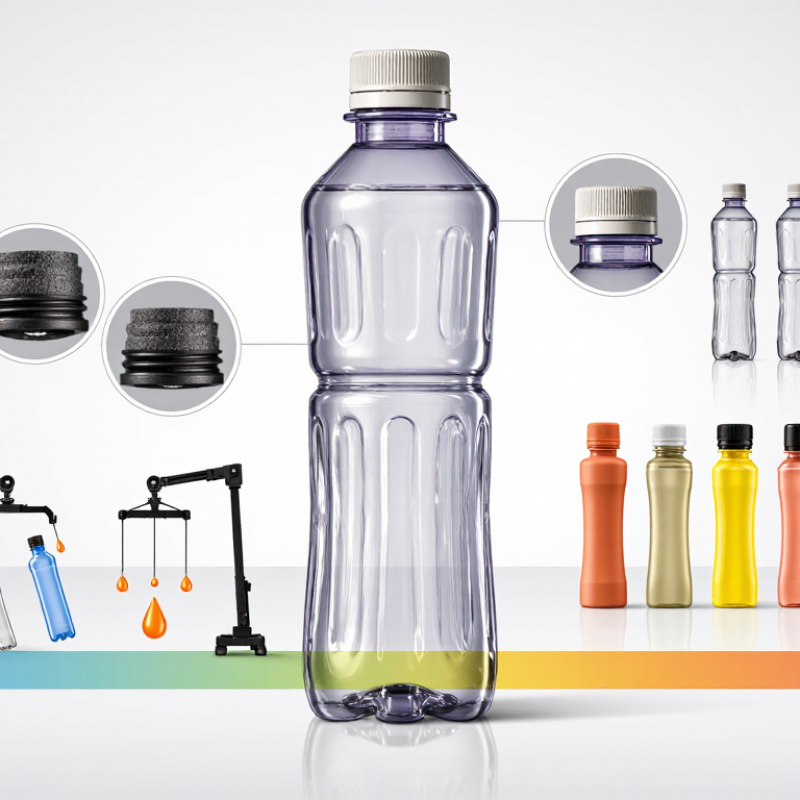
China Best Leak Proof Plastic Bottles for Shipping?

Types of Leak-Proof Plastic Bottles Made in China

China’s leak-resistant plastic bottles come in several useful forms. PET bottles are clear, lightweight, and suitable for many personal-care or household liquids. Their transparency makes fill levels easy to check. HDPE bottles are opaque, sturdy, and commonly chosen for detergents, cleaners, and other everyday products. They handle knocks well, though their appearance is less refined.

LDPE squeeze bottles offer flexible walls for lotions, sauces, and similar products that need controlled dispensing. For shipping, the bottle material is only part of the answer. A threaded neck, well-matched cap, and suitable liner can help prevent leaks during vibration and temperature changes.

Small details matter. A cap that feels tight by hand may still loosen in transit.

Factories in China may also produce bottles with flip-top, disc-top, or child-resistant-style closures, depending on the intended product and specification. Ask for samples, check neck-and-cap compatibility, and test filled bottles in realistic shipping conditions.

I would not rely on a “leak-proof” label alone; closure quality and packing method can vary between production runs. A simple side-by-side test can reveal more than a polished product photo.

Materials and Closures That Help Prevent Shipping Leaks

Leak prevention starts with matching the bottle resin to the product and shipping conditions. HDPE often suits impact-prone shipments; PET offers clarity and stiffness but can crack under stress if poorly designed. Check compatibility using the actual contents, storage temperature, and expected transit time. A resin name alone cannot predict performance. Small details matter.

The closure is just as important. A continuous-thread cap should engage fully without cross-threading, while a compatible liner can help seal the bottle mouth. For wet or oily contents, test the liner against the formulation rather than assuming a tight cap is enough. Add a tamper-evident band only when it does not interfere with proper closure. Not foolproof. Over-tightening can distort threads or liners, so set and verify application torque.

Testing should reflect real handling: filled bottles, realistic fill levels, side and inverted orientations, and vibration or impact exposure. ASTM D4991 provides a vacuum method for evaluating leakage in rigid containers; it can support screening, but does not replace shipment-specific trials. The U.S. EPA’s 2018 Advancing Sustainable Materials Management report records 82.2 million tons of U.S. containers and packaging in municipal solid waste, underscoring how widely these packages are used. It does not measure leak rates. That distinction matters: a design still needs documented tests under its own shipping conditions.

China Best Leak-Proof Plastic Bottles for Shipping: Material Selection

Typical polymer density ranges help compare common bottle materials. Higher density does not automatically mean better leak prevention, but material stiffness, chemical compatibility, bottle-wall design, and closure performance all influence shipping reliability.

HDPE is widely used for durable chemical and liquid containers, while PET provides high stiffness and clarity. PP is lightweight and offers good heat resistance. For leak prevention, pair the selected bottle material with a properly torqued screw cap, suitable liner such as foam or induction-seal liner, and verified transport testing.

How to Match Bottle Design to Product and Shipping Conditions

China Best Leak Proof Plastic Bottles for Shipping?

Choosing a bottle starts with the product, not the parcel. Thin liquids can escape through loose closures, while thicker formulas may need wider openings for controlled filling. Check that the plastic suits the product’s ingredients and expected storage temperature. A secure cap helps, but a compatible liner or inner seal can add protection. Small details matter.

Tips: Fill a sample bottle and turn it upside down overnight. Then check the cap, neck, and seal for moisture. Test bottles inside the actual shipping box, too. A bottle can pass a bench test and still leak after rough handling.

Shipping conditions shape the design. Long routes, pressure changes, and repeated impacts can stress a bottle or loosen its closure. Choose a shape that fits snugly in its packaging, with enough cushioning to prevent movement. Avoid overfilling; leave suitable headspace for temperature-related expansion. Run small packing trials before ordering in bulk. The results may be uneven at first, and that is useful: revise the closure, fill level, or cushioning, then test again.

China Best Leak Proof Plastic Bottles for Shipping? - How to Match Bottle Design to Product and Shipping Conditions

Product and Typical Use Bottle Design to Consider Material Considerations Closure and Seal Options Shipping Risks to Check Practical Validation
Water-based lotions, shampoos, and liquid soaps Wide-base bottle with a sturdy shoulder; choose a shape that resists tipping and fits the secondary packaging. HDPE is commonly used for opaque, squeezable containers. PET is an option when clarity and a more rigid feel are desired. Confirm compatibility with the complete formula. Threaded cap with a compatible liner or sealing disc. A pump may need a lock or overcap, plus a secondary seal for shipping. Cap loosening, pump activation, squeeze pressure, and leakage when packages are laid on their side. Check closure fit and seal integrity with the actual filled product; test representative packed units in expected orientations.
Thin liquids, such as cleaners or personal-care toners Rigid bottle with a controlled neck finish and enough wall strength to limit deformation during handling. HDPE and PET are common packaging choices, but suitability depends on the ingredients, concentration, and storage conditions. Verify chemical compatibility before selection. Threaded cap with a suitable liner or plug-style seal. Add a tamper-evident band or induction seal when appropriate for the product and filling process. Low-viscosity liquids can escape through small gaps; pressure changes and rough handling can expose weak seals. Conduct leak checks on filled bottles, then evaluate the complete shipping package using relevant distribution tests.
Essential oils, fragrances, and other solvent-containing liquids Compact, rigid bottle with a neck and dispensing system designed for the formula; use protective secondary packaging. Do not assume a plastic resin is compatible based on appearance alone. Test the actual formula for stress cracking, swelling, softening, odor transfer, and product change. Closures and liners must be selected for the specific formulation. A tight-fitting cap alone does not establish compatibility or leak resistance. Solvent attack, permeation, temperature exposure, and leakage through incompatible closure materials. Run product-contact compatibility and shelf-life evaluations, followed by filled-package leak and transport testing.
Powders, granules, and dry ingredients Wide-mouth bottle for easy filling and dispensing; select a neck opening and wall design that suit the fill weight and handling needs. HDPE and PP are commonly used for rigid containers. Consider moisture sensitivity, light sensitivity, and the required barrier properties of the complete package. Threaded cap with a fitted liner or an inner seal. A desiccant may be appropriate for moisture-sensitive contents if permitted by the product requirements. Cap back-off, fine-powder migration through the closure, and moisture ingress during storage or transport. Check seal coverage and closure fit; assess moisture protection and leakage with the actual powder and packed configuration.
Thick creams, gels, and pastes Wide-mouth jar or a robust bottle with a large opening; select a shape that can withstand compression in packed cartons. PP, HDPE, or PET may be considered depending on product compatibility, clarity needs, and container stiffness. Test the filled package rather than relying on resin type alone. Threaded closure with an appropriate liner or inner seal. For dispensing closures, confirm that the outlet remains closed during transport. Product pressure against the lid, damaged lids from stacking, and leakage through dispensing openings. Evaluate closure retention and carton stacking; inspect for leakage after handling and distribution simulation.
Products shipped by air or through routes with changing altitude Use a well-supported bottle and closure combination; avoid relying on a dispensing pump or flip-top as the only shipping seal. Choose material based on formula compatibility and structural performance. Bottle shape and wall design affect deformation under changing pressure. Use a validated primary seal, such as a suitable liner or inner seal, with a secured outer closure where applicable. Pressure differentials can stress the bottle and closure, particularly when headspace and seal design are not controlled. Test the filled, fully packed configuration under conditions relevant to the route. ASTM D6653 is a standard test method for altitude effects on packaging systems.
Long-distance parcel or mixed-mode shipping Select a bottle with adequate impact resistance and geometry that can be restrained inside the carton with cushioning or dividers. Compare actual filled-bottle performance; resin names alone do not predict the result because wall thickness, shape, and processing also matter. Use a closure that remains secure after vibration and handling. Add a secondary containment bag when leakage could damage nearby goods. Drops, vibration, compression, abrasion, and repeated handling can damage bottles or loosen closures. Assess the complete package using a distribution test plan appropriate to the shipping system; ASTM D4169 provides procedures for testing shipping units.

Selection note: No bottle or closure is universally leak-proof. Confirm resin, liner, closure, and dispensing-system compatibility with the actual product, then test the filled and packed unit under expected storage and shipping conditions. ASTM D5276 describes free-fall drop testing of loaded containers; choose test procedures and severities appropriate to the distribution environment.

Quality Checks for Leak Resistance and Transport Durability

For leak resistance, test bottles as shipped, not only empty samples. Fill production bottles with water, fit the intended cap and liner, then record closure torque. Invert them over absorbent paper for 24 hours; inspect the threads, shoulders, and base for dampness. Small drops matter. Repeat after warm and cool conditioning, since plastic and closures can respond differently to temperature. Set written pass/fail limits before testing, and keep samples from multiple production runs.

Shipping adds impacts and vibration. ASTM International’s D5276 describes free-fall drop testing; D999 covers vibration testing for shipping containers. Use relevant procedures with filled, capped bottles inside their actual cartons, then check for cracks, cap movement, and leakage. The EPA’s 2018 Advancing Sustainable Materials Management report estimated 14.5 million tons of U.S. plastic containers and packaging. Only 13.6% was recycled. That is not a shipping-failure rate, but it underscores the value of preventing avoidable packaging waste. Our checks can still miss weak seals. No test proves zero risk, so retest after changes to the cap, resin, or carton.

How to Compare Chinese Bottle Suppliers for Shipping Needs

When comparing Chinese bottle suppliers for shipping, ask for evidence, not just catalog photos. Request resin specifications, wall-thickness tolerances, cap and liner details, and sample bottles from the production line. Ask how each supplier tests filled bottles for leakage after inversion, pressure changes, and vibration. Request the test conditions and results in writing. A “leak-proof” claim without a defined test is hard to compare.

Check how bottles are packed, too. Ask for carton dimensions, dividers, pallet patterns, and drop-test records using a method such as ISTA 3A. Then run a small shipment trial with your actual liquid and shipping route. A spreadsheet cannot catch every loose cap. In OECD’s Global Plastics Outlook (2022), packaging accounted for 40% of plastic waste generated in 2019, making material and packaging choices worth checking alongside price. UNCTAD’s Review of Maritime Transport 2024 reported maritime trade grew 2.4% in 2023; handling and transit conditions still vary. Compare suppliers on documented quality checks, batch traceability, sample consistency, and response time when a test fails. Ask for current quality-system certificates and verify their scope. Cheap samples can look convincing. Production batches may not match perfectly.

FAQS

What should guide bottle design?

Start with the liquid. Thin liquids may escape through loose caps, while thick formulas need wider openings. Check material compatibility and storage temperatures.

How can I check for leaks at home?

Fill a sample bottle, close it, and leave it upside down overnight. Check the cap, neck, and seal for moisture. Small drops matter.

Why test bottles inside shipping cartons?

A bottle may pass a simple leak test but fail after impacts or vibration. Pack it as intended, add cushioning, and check for movement.

How much space should I leave inside a bottle?

Avoid filling it to the brim. Leave suitable headspace for temperature-related expansion. The right amount depends on the liquid and shipping conditions.

What checks help assess leak resistance?

Test filled bottles with their intended caps and liners. Leave them inverted over absorbent paper for 24 hours, then inspect the threads, shoulders, and base.

How can I test bottles for transport damage?

Use filled, capped bottles in their actual cartons. Include drop and vibration tests, then check for cracks, loose caps, and leaks. Retest after design changes.

What information should I request from a bottle supplier?

Ask for resin details, wall-thickness limits, cap and liner specifications, and written test results. Request samples from production, not just display samples.

How can I compare suppliers beyond price?

Compare batch consistency, traceability, packing details, and response time when tests fail. Run a small shipment trial with your liquid and route. Results can vary. That deserves a second look.

Conclusion

What makes a plastic bottle leak-proof for shipping depends on how well its material, closure, and design work together. Bottles made from suitable plastics can provide the strength and flexibility needed for different products and transport conditions, while compatible caps, liners, seals, and secure threads help prevent leaks. Choosing the right shape, capacity, and opening also matters: a bottle should suit the product’s properties and remain stable during handling, stacking, and changes in temperature or pressure.

Before selecting a bottle, check its leak resistance and durability through practical inspections and transport-focused tests, including closure security, impact resistance, and performance after repeated handling. When comparing Chinese suppliers, review their production consistency, quality-control procedures, customization options, and ability to provide samples for evaluation. Matching these factors to your shipping requirements can help reduce leakage risks and protect products throughout transit.

Oliver

Oliver

Oliver is a seasoned marketing professional with a wealth of expertise in driving brand awareness and engagement. With a deep understanding of our company's product offerings, he consistently delivers high-quality content that enriches our professional blog. His insights not only shed light on......