Understanding the Heat Resistance of PETG Plastic Bottles?

Time:2026-06-04 Author:Sophia
0%

Understanding the heat resistance of PETG plastic bottles is critical in various industries. PETG, or glycol-modified polyethylene terephthalate, is known for its durability and clarity. However, the core question remains: What is the heat resistance of PETG plastic bottles?

Heat resistance defines how well material can endure high temperatures without deforming or losing functionality. PETG offers decent heat resistance, but it is essential to recognize its limits. For instance, while PETG can withstand temperatures up to 70°C, prolonged exposure can compromise its structural integrity.

Many businesses depend on PETG for packaging. Yet, improper temperature management can lead to issues. Understanding the heat resistance of PETG plastic bottles is not only about temperature limits but also about ensuring safety and performance. Companies need to consider these factors, especially in sectors like food and beverage. It's crucial to reflect on the real-world implications of heat exposure.
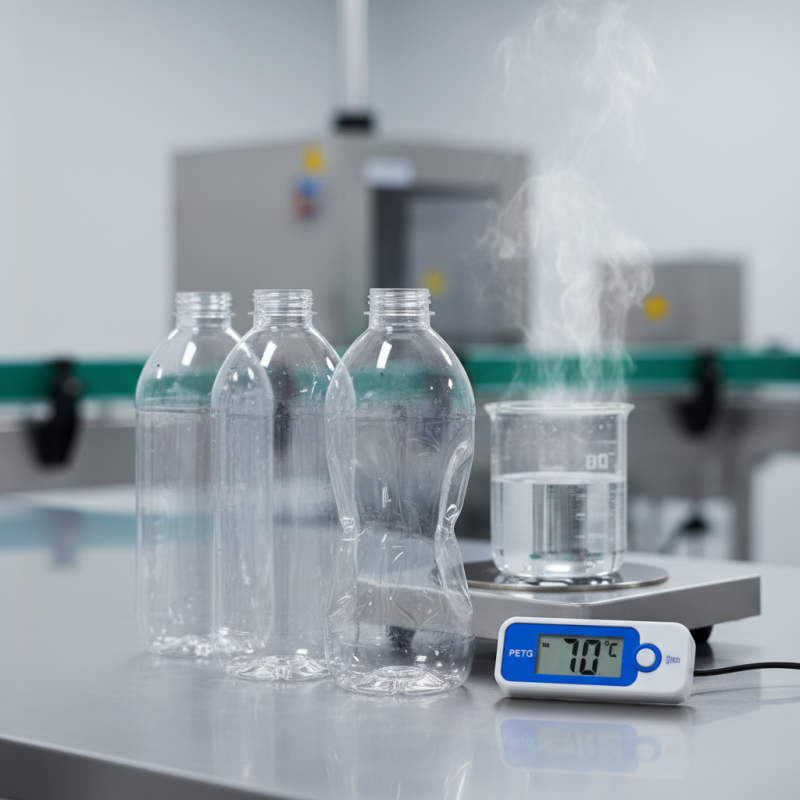
Understanding the Heat Resistance of PETG Plastic Bottles?

Properties of PETG Plastic and Its Applications

PETG plastic, or polyethylene terephthalate glycol, is a versatile material widely used in various applications. It is known for its excellent clarity and toughness. PETG offers a good balance between flexibility and strength, making it suitable for different contexts. This plastic is less brittle than other materials, which helps it withstand impact. Additionally, PETG is resistant to UV light, ensuring that products maintain their appearance over time.

In terms of heat resistance, PETG can tolerate temperatures up to 80°C (176°F). This makes it suitable for items that may encounter warmth but not extreme heat. However, this limitation raises some questions. For instance, how do PETG bottles perform in high-temperature environments? In real-world scenarios, prolonged exposure to heat might compromise their structure. It’s essential to consider this when selecting PETG for certain applications. Many users appreciate its properties, but awareness of its limits is crucial.

When focusing on packaging and food applications, the reliability of PETG shines through. Its chemical resistance means it can safely house various substances. That said, it is crucial to test specific applications for safety. Understanding how PETG behaves under stress or heat can inform better choices. Users should remain vigilant and informed about this plastic's full range of characteristics.

Understanding the Heat Resistance of PETG Plastic Bottles - Properties of PETG Plastic and Its Applications

Property Value Unit Application
Tensile Strength 50 MPa Bottle manufacturing
Flexural Modulus 2000 MPa Structural components
Impact Strength 5.4 kJ/m² Food packaging
Heat Deflection Temperature 80 °C High-temperature applications
Density 1.27 g/cm³ General usage
Transparency Clear N/A Bottles and containers

Factors Affecting Heat Resistance in PETG Bottles

The heat resistance of PETG plastic bottles is influenced by various factors. One significant factor is the material's inherent thermal properties. PETG exhibits a glass transition temperature (Tg) of around 80°C. When exposed to temperatures above this threshold, the structure of PETG can begin to soften, affecting its integrity. Reports indicate that at high temperatures, PETG may lose its shape and mechanical strength.

Another critical factor is the manufacturing process. The cooling rate during production can greatly affect the crystallinity of the PETG. Higher crystallinity often results in improved heat resistance. Data from industry studies show that bottles with optimized processing conditions can withstand temperatures up to 85°C without deformation. Additionally, the thickness of the bottle walls plays a role. Thicker walls can provide better heat resistance, but this must be balanced with the overall weight and cost of the product.

Environmental conditions also impact heat resistance. Prolonged exposure to direct sunlight can cause degradation. UV rays can weaken PETG over time, leading to reduced performance under heat stress. This raises important questions about the durability of PETG bottles in varying climates. Understanding these factors helps manufacturers create bottles that meet safety and sustainability standards, even as challenges remain.

Comparison of PETG with Other Plastic Materials

When comparing PETG plastic bottles to other materials, several factors reveal their resilience. PETG, or glycol-modified polyethylene terephthalate, is renowned for its robust thermal resistance. According to industry data from the American Chemistry Council, PETG can withstand temperatures up to 70°C without losing integrity. This property makes it suitable for applications requiring durability under heat.

In contrast, typical PET does not perform as well. It softens at around 60°C, which limits its usability in hotter environments. Polypropylene (PP) boasts a higher heat resistance, reaching about 100°C, but it often lacks the clarity and strength of PETG. While PP is more suitable for high-temperature applications, PETG's balance of durability and visual appeal can't be overlooked.

Tip: Consider the specific application of your bottle. If exposure to high temperatures is expected, polypropylene might be the better choice. However, for products that need clarity and strength at moderate temperatures, PETG is still a leading option. Despite its advantages, one must also reflect on potential downsides, like its recyclability compared to other plastics. This balance of benefits and limitations is crucial for sustainable materials management.

Heat Resistance Comparison of Plastic Materials

Testing Methods for Evaluating Heat Resistance

Evaluating the heat resistance of PETG plastic bottles involves several testing methods. One widely accepted approach is thermal analysis, which includes Differential Scanning Calorimetry (DSC). This method measures how a material's heat capacity changes with temperature. Reports indicate that PETG typically has a glass transition temperature around 80°C, influencing its performance in high-temperature conditions.

Another important technique is the heat distortion temperature (HDT) test. It assesses the temperature at which a polymer deforms under a specified load. Data from recent studies show that PETG can start to lose its integrity at temperatures as low as 60°C under stress. Such findings highlight the material's limitations in hot environments, particularly for applications involving heated contents.

In addition to these methods, aging tests play a crucial role. They simulate long-term exposure to heat over time. Some data suggest that prolonged exposure can lead to warping or other structural failures. This raises questions about the reliability of PETG under constant thermal stress. These insights are essential for manufacturers to ensure the safety and functionality of PETG bottles in various applications.

Best Practices for Storing PETG Bottles in High Temperatures

When storing PETG bottles in high temperatures, consider some key factors to maintain their integrity. PETG is known for its heat resistance, but excessive heat can still deform or damage the material. Avoid direct sunlight exposure and high-heat environments, such as car interiors. Instead, store PETG bottles in a cool, dry place. Some indoor locations might seem safe but can become surprisingly warm. Always check temperature readings in storage spaces.

Ventilation is also essential. Bottles need air circulation to prevent heat accumulation. Stacking them tightly can lead to pressure build-up and potential warping. Instead, allow space for each bottle. If bottles contain liquids, ensure they are tightly sealed to prevent leaks. Keep in mind, even slight imperfections can become issues when temperatures rise. Check your bottles regularly for any signs of stress or warping. Taking these precautions can significantly extend the lifespan of PETG bottles.

FAQS

: What affects the heat resistance of PETG bottles?

: Heat resistance in PETG bottles is affected by thermal properties, manufacturing process, and environmental conditions.

What is the glass transition temperature (Tg) of PETG?

The Tg of PETG is around 80°C. Exceeding this temperature can soften the material.

How does cooling rate during production impact PETG?

Cooling rate affects the crystallinity of PETG. Higher crystallinity often improves heat resistance.

How much heat can PETG bottles withstand?

Bottles with optimized conditions can withstand up to 85°C without deforming.

How does wall thickness influence heat resistance?

Thicker bottle walls generally provide better heat resistance, but they also affect weight and cost.

Can sunlight exposure degrade PETG bottles?

Yes, prolonged exposure to sunlight can weaken PETG, reducing heat resistance and performance.

How does PETG compare to typical PET?

PETG withstands up to 70°C, while typical PET softens at around 60°C, limiting its use in heat.

What about PETG vs. polypropylene (PP)?

PP can withstand about 100°C, but it lacks the clarity and strength of PETG.

Is recyclability a concern for PETG?

Yes, PETG's recyclability is less than other plastics, which is a downside to consider.

Should I always choose PETG for my applications?

Not necessarily. Assess your specific temperature needs and consider the trade-offs of each material.

Conclusion

Understanding the heat resistance of PETG plastic bottles is crucial for their effective application in various industries. PETG, known for its transparency and durability, exhibits excellent impact resistance and has become a popular choice for packaging. However, its heat resistance can be influenced by several factors, including the thickness of the bottle, processing conditions, and additives used during manufacturing. When compared to other plastics, PETG demonstrates better thermal stability, although alternatives may offer unique benefits in specific scenarios.

To evaluate the heat resistance of PETG bottles, various testing methods are employed, which help in determining the material's performance under elevated temperatures. For optimal storage of PETG bottles in high-temperature environments, implementing best practices is key—these include avoiding direct sunlight exposure and maintaining stable temperature conditions. By understanding these elements, manufacturers and consumers can ensure the reliability and safety of PETG products in diverse applications.

Sophia

Sophia

Sophia is a dedicated marketing professional with an exceptional depth of knowledge about her company's products and services. With a keen understanding of market trends and customer needs, she crafts insightful blog posts that not only inform but also engage readers, enriching the company’s online......