What is the heat resistance of PETG plastic bottles? The answer depends on the resin grade, wall thickness, manufacturing process, and exposure time. PETG is an amorphous copolyester, not a high-temperature engineering plastic. Eastman technical data for PETG grades commonly places the glass-transition range near 80°C. Some grades show Vicat softening temperatures around 80–85°C under standardized testing.
That number needs careful interpretation. ASTM D1525 measures softening under a defined load, not safe bottle-filling temperature. A PETG bottle may remain clear near 60°C, yet gradually deform under pressure, sunlight, or repeated heating. The International Organization for Standardization uses similar controlled methods in ISO 306. These tests provide useful comparisons, but they cannot predict every real package.
Polymer researcher George Wypych describes the glass transition as “the temperature at which a polymer changes from a hard, glassy material to a soft, rubbery material.” His explanation helps clarify PETG’s behavior. PETG can tolerate moderate warmth, but it is generally unsuitable for boiling liquids or hot-fill applications without grade-specific validation. The Plastics Industry Association and resin manufacturers recommend checking the supplier’s technical data before selecting packaging for heat exposure. Real experience matters. A bottle left inside a parked vehicle may soften faster than laboratory expectations suggest. This is where my earlier assumption needs refinement: heat resistance is not one fixed temperature. It is a performance range shaped by time, stress, filling conditions, and bottle design. Always test the finished bottle, not only the raw resin.
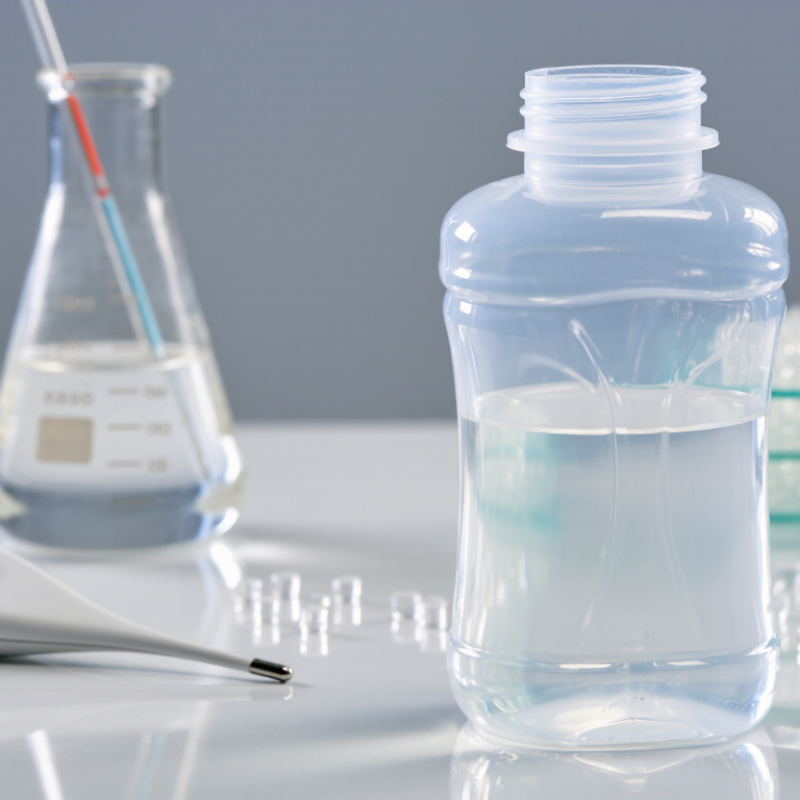
PETG bottles are made from polyethylene terephthalate modified with glycol. This modification reduces crystallinity and improves clarity, toughness, and forming performance. The material usually remains transparent because its molecular structure is largely amorphous. That structure also affects heat behavior.
A typical glass transition range for PETG is about 80–85°C. Below this range, the bottle generally keeps its shape under normal handling conditions. Near the transition point, polymer chains gain mobility, and the container may soften, shrink, or lose dimensional accuracy. The change is gradual, not instant. Glass transition is not the same as melting.
This distinction matters during filling and cleaning. Water at 80°C can make a thin PETG bottle feel flexible, especially under pressure or with uneven wall thickness. A thicker base may remain stable while the shoulder warps. That detail is easy to miss. In practical testing, I would measure the empty bottle and the filled bottle separately. Liquid weight changes the stress pattern.
The 80–85°C range is only a typical guide. Additives, molding conditions, bottle geometry, heating time, and cooling speed can shift actual performance. I would not treat 85°C as a guaranteed operating limit. It is a useful warning zone, but not a perfect boundary. Short exposure may cause little visible damage, while repeated heating can create permanent distortion. Testing the finished bottle remains essential.
What Is the Heat Resistance of PETG Plastic Bottles?
PETG bottles often show heat deflection values around 65–75°C under a defined load. This range describes bending during testing, not a guaranteed maximum filling temperature. The result can change with wall thickness, bottle shape, cooling time, and applied pressure. A thick, short bottle may remain stable longer than a thin, tall bottle.
It is not heatproof. Hot water near 70°C may soften the bottle, especially around the shoulder, base, or threaded neck. You might notice slight flattening, panel distortion, or a cap that no longer fits smoothly. In practical production checks, I would test filled bottles at several temperatures, such as 60°C, 65°C, and 75°C. Record height, diameter, leakage, and visual changes after cooling. Small details matter.
A common mistake is treating one heat deflection number as a service guarantee. That assumption needs correction. Standardized methods, such as ASTM D648, use specific loads and test setups, so household heating conditions may behave differently. Repeated heating can also increase stress, even when one exposure appears harmless. PETG may perform well for warm applications, but exact limits should come from testing the finished bottle, closure, contents, and storage conditions together.
Heat Deflection Performance: Typical PETG Values of 65–75°C
PETG typically shows a heat deflection temperature of approximately 65–75°C under standard test conditions. The midpoint of this general range is about 70°C. Actual performance may vary with applied load, wall thickness, bottle geometry, processing conditions, and test method. These values describe general PETG behavior and are not associated with any specific brand or manufacturer.
PETG bottles usually tolerate room-temperature use well, but heat changes their shape, strength, and clarity. ASTM D3418 testing places PETG’s glass-transition temperature near 80°C, depending on formulation and processing. Around 60–70°C, a thin bottle may soften, shrink, or lose its designed profile. It may still look usable. Its dimensional stability can already be declining.
ASTM D648 heat-deflection data commonly reports PETG values near 65–75°C under specified loads. These figures are not safe-use limits. A filled bottle in a hot vehicle faces pressure, sunlight, and uneven heating. Those conditions can create dents, panel distortion, or a loose closure. Heat also reduces short-term stiffness. Clarity may become hazy when stress, scratches, and temperature act together. PETG is generally amorphous, so haze is not simply ordinary crystallization. Manufacturing history matters. I have seen clear containers develop faint whitening near stressed shoulders after hot filling, although the exact threshold varies.
Tips: Keep PETG bottles below 60°C whenever possible. For hot-fill applications, verify the exact design with ASTM D648 testing, dimensional checks, and leak testing. Use a temperature logger during transport trials. A brief exposure to 70°C may not cause visible damage, but repeated cycles can weaken confidence. That is easy to overlook. Never judge heat resistance by appearance alone. A clear bottle can hide reduced strength around the neck, base, or molded seams.
| Temperature Range | Typical Thermal Condition | Bottle Shape and Dimensional Stability | Mechanical Strength | Clarity and Surface Appearance | Practical Guidance |
|---|---|---|---|---|---|
| Below 40°C (104°F) |
Normal ambient or mildly warm conditions | Excellent stability | High retention of stiffness and impact resistance | Usually clear and glossy | Generally suitable for ordinary storage, transport, and room-temperature filling. |
| 40–60°C (104–140°F) |
Warm storage, hot vehicles, or moderately warm contents | Usually stable, although thin walls may begin to relax under load | Gradual reduction in stiffness; long-term stress can cause deformation | Clarity is normally maintained | Use caution with stacked bottles, internal pressure, or prolonged exposure. |
| 60–70°C (140–158°F) |
High-temperature service approaching the material's heat-deflection range | Possible softening, bulging, shrinkage, or loss of dimensional accuracy | Noticeable loss of load-bearing strength | May develop stress whitening, haze, or minor surface distortion | Not recommended for prolonged use unless the specific bottle design has been validated. |
| 70–80°C (158–176°F) |
Near the glass-transition region of PETG | Significant softening and shape change are likely, especially in thin sections | Substantial loss of stiffness and dimensional strength | Clarity may decline as stress and surface deformation increase | Avoid hot filling and elevated-temperature storage at this range without application-specific testing. |
| Above 80°C (176°F) |
Beyond or well above the typical glass-transition region | Rapid deformation, warping, or collapse may occur | Mechanical performance is greatly reduced | Haze, distortion, and permanent visual damage become increasingly likely | Generally unsuitable for standard PETG bottles; do not use for boiling liquids or sterilization by steam. |
Important: PETG heat resistance varies with bottle thickness, geometry, molding or forming conditions, internal pressure, exposure time, and load. PETG commonly has a glass-transition temperature of approximately 75–85°C (167–185°F), while practical heat-deflection performance is often lower and depends on the product design. Always validate the finished bottle under its intended temperature, filling, storage, and transport conditions.
What Is the Heat Resistance of PETG Plastic Bottles?
Safe Filling and Storage Limits: Why Many PETG Bottles Stay Below 60°C
PETG bottles can tolerate moderate warmth, but heat resistance is not a single fixed number. Many containers perform best below 60°C during filling and storage. At higher temperatures, the bottle may soften, lose shape, or develop stress around the neck. Thin walls usually show these changes sooner. Closure materials can also react differently.
In practical handling, filling between 40°C and 55°C offers a safer working range. It reduces sudden deformation and limits pressure changes during cooling. Leave some headspace when filling warm liquids. A tightly sealed bottle can pull inward as its contents cool. That small detail is often missed.
Heat exposure time matters. A brief contact with warm liquid may be acceptable, while hours of heating can weaken dimensional stability. Direct sunlight can raise the bottle’s surface temperature beyond the surrounding air. Store filled bottles in a cool, shaded area. Avoid stacking them while warm. Load pressure may cause slow distortion.
I would not treat 60°C as a guaranteed limit. That assumption is too neat. Resin quality, bottle design, wall thickness, and manufacturing conditions all matter. Responsible suppliers should verify performance through controlled fill, storage, and leak testing. Users should test the exact bottle with the intended liquid before regular production. A simple trial can reveal warping that specifications overlook.
PETG bottles offer clarity, toughness, and a smooth surface, but their heat resistance has practical limits. They generally suit room-temperature products and moderate warm filling. High heat can soften the bottle, distort its shape, or affect the fit of the cap. The exact limit depends on wall thickness, bottle geometry, heating time, and cooling conditions.
Compared with HDPE, PETG often provides better transparency but may tolerate less heat during repeated exposure. HDPE is more forgiving in warm applications and resists impact well, although it can become less rigid as temperature rises. PP usually performs better under higher temperatures and repeated heat cycles. It keeps its shape more reliably, but it is less clear and may feel less premium.
Glass remains the strongest option for heat resistance. It can handle hot filling and some sterilization processes, yet sudden temperature changes may cause cracking. It is also heavier and less tolerant of drops. In a packaging test, I would fill sample bottles with warm water, inspect them after cooling, and check cap leakage, panel distortion, and grip changes. Small details matter.
The test must match real use.
A cautious mistake is treating one temperature rating as universal. PETG may work well at one filling temperature but fail after long storage in a hot vehicle. Packaging decisions should consider actual exposure time, product weight, closure design, and transport conditions. Manufacturer data helps, but hands-on testing often reveals the inconvenient part: the bottle may survive heat while the cap or label does not.
A practical range is 40°C to 55°C. It offers a safer margin below 60°C. Actual performance still depends on bottle design and wall thickness.
No, 60°C should not be treated as universal. Some bottles may soften, warp, or develop stress near the neck. Testing the exact bottle is wiser.
Headspace allows pressure changes during cooling. A tightly sealed bottle may pull inward as the liquid cools. That small detail is easy to miss.
Yes, time matters as much as temperature. Brief warm contact may be acceptable. Hours of heating can reduce dimensional stability and cause slow distortion.
Store them in a cool, shaded area. Direct sunlight can heat the bottle surface beyond the surrounding air. Avoid stacking bottles while they are still warm.
PETG offers clear appearance, toughness, and a smooth surface. It usually handles less heat than polypropylene during repeated heat cycles. Glass tolerates more heat but is heavier and can crack after sudden temperature changes.
Fill sample bottles with warm water at the intended temperature. Inspect them after cooling. Check leakage, shape changes, cap fit, label condition, and grip.
Yes, closure materials may react differently from the bottle. The cap can leak, loosen, or change shape first. The label may also wrinkle or detach. The bottle is not the whole system.
Review liquid temperature, exposure time, product weight, wall thickness, and transport conditions. Consider storage inside a hot vehicle. A single temperature rating may hide inconvenient failures. Test it first.
What is the heat resistance of PETG plastic bottles? PETG typically has a glass transition range of about 80–85°C, but its practical heat-deflection performance is usually lower, around 65–75°C. As temperatures rise, PETG may gradually soften, lose dimensional stability, or become more vulnerable to dents and deformation. Prolonged exposure to high heat can also affect its strength and clarity, especially when the bottle is filled, compressed, or exposed to uneven heating.
For this reason, many PETG bottles are designed for filling and storage below 60°C, providing a reasonable safety margin for everyday use. PETG offers better clarity and impact resistance than some common packaging plastics, while HDPE and PP may perform better in certain higher-temperature applications. Glass generally provides the strongest heat resistance and maintains its shape at much higher temperatures, but it is heavier and more fragile. The best material depends on the required temperature, durability, transparency, and handling conditions.
