China Top Plastic Jars How to Prevent Cracking in Transit

Time:2026-10-20 Author:Ethan
0%

When China’s plastic jars arrive cracked, the problem often begins before loading. A jar may leave the factory looking perfect, yet fail after vibration, compression, or a sudden temperature change. Understanding How to prevent plastic jars from cracking during transport requires more than choosing thicker plastic.

Packaging engineer Susan E. M. Selke offers a practical principle: “Packaging must protect the product through the distribution environment.” This means testing the complete system, not only the container. The jar, cap, product weight, carton, separator, pallet, and transport route all matter. A rigid jar can become brittle in cold conditions. A thin shoulder may crack when cartons are stacked unevenly. Small defects near the neck can also grow during repeated vibration.

Start with resin selection, wall thickness, and corner design. High-density polyethylene and polypropylene behave differently under impact and temperature changes. Suppliers should inspect molding lines, flash, weld marks, and stress whitening. Drop tests should use filled jars, closed caps, and realistic carton layouts. Compression testing can reveal whether lower cartons carry excessive weight. Transit simulation is valuable, but real shipment feedback is equally important.

Details matter.

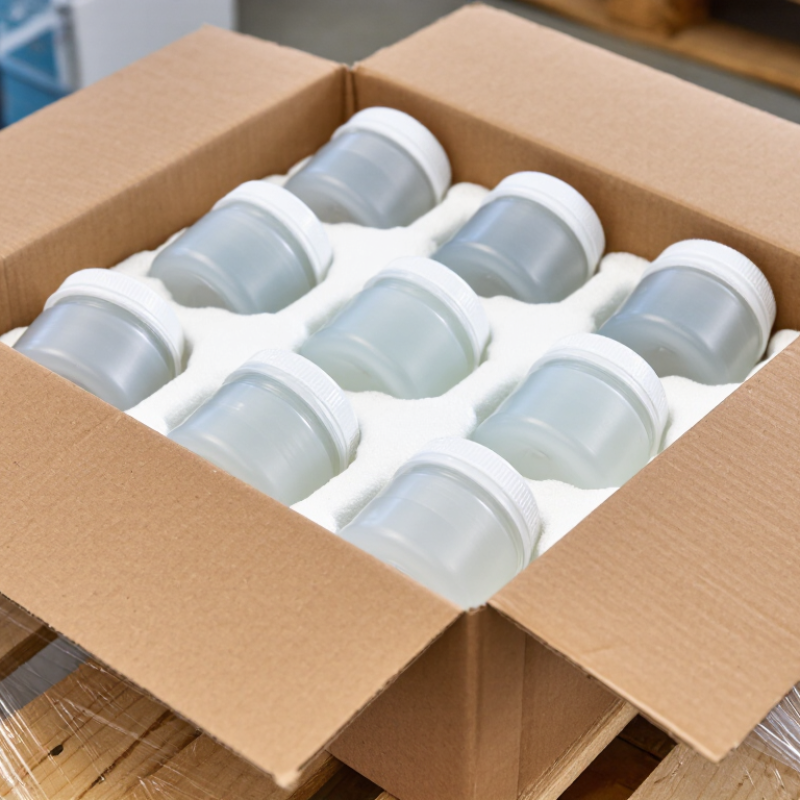
Use molded pulp or foam separators where jars can collide. Leave enough clearance around shoulders and bases. Avoid overtightening caps. Control pallet height and stretch-wrap tension. Still, no packaging plan is perfect. A successful trial in warm weather may fail during winter delivery. That uncomfortable gap deserves review. Reliable exporters should record damage patterns, compare batches, and improve the design instead of blaming transport alone.
China Top Plastic Jars How to Prevent Cracking in Transit

Plastic Jar Cracking Risks During Transit

Plastic Jar Cracking Risks During Transit

Cracks usually begin at the shoulder, base corners, or closure thread. These areas absorb repeated impact when cartons shift inside a container. Cold temperatures can reduce polymer flexibility, while excessive closure torque creates hidden stress around the neck. A 250 ml jar may look sound after filling but fail after several vibration hours.

PlasticsEurope’s Plastics—the Fast Facts 2024 reports 413.8 million tonnes of global plastic production in 2023. Packaging represented about 39% of European plastics demand. This scale makes small design weaknesses expensive. For China plastic jar shipments, I recommend testing the filled pack, not only the empty jar. Use ASTM D4169-23 or an appropriate ISTA procedure, including vibration, compression, and controlled drops. Check samples after each stage. Hairline fractures often appear before leakage.

Our first trial once passed a basic drop test but failed after vibration. The carton was too tall, and the jars struck the dividers repeatedly. We later increased side-wall thickness, softened the base transition, and added tighter internal cells. A 2% sample inspection was not enough for that shipment. We now combine visual checks, leak testing, and periodic torque measurement. The process is slower. It is also more honest.

Test conditions should reflect the route, seasonal temperature, pallet height, and actual closure force.

Data reference: PlasticsEurope, Plastics—the Fast Facts 2024; ASTM D4169-23; ISTA transport-test procedures.

Material Selection for Stronger Plastic Jars

Choosing the right plastic material is the first defense against cracking during transit. For jars shipped from China, the resin must handle impact, vibration, stacking pressure, and temperature changes. Material choice affects every later decision. Small details matter.

HDPE provides good impact resistance and remains flexible under rough handling. PET offers strong rigidity and a clear appearance, but it can become more vulnerable to sharp impacts in cold conditions. PP tolerates heat well and suits jars needing repeated handling. However, no resin solves every shipping problem. Ask the supplier for resin specifications, impact data, and stress-cracking results. Do not trust appearance alone.

Wall thickness must match the jar’s shape and filling weight. Thin sections around the shoulder, neck, or base often become weak points. Rounded corners distribute pressure better than sharp transitions. In practical packaging checks, a jar can look perfect and still fail after several drops. Drop tests should use the actual closure, fill weight, carton, and internal protection. Test samples at both room temperature and lower temperatures. I would also inspect recycled content carefully, because inconsistent material quality may affect toughness between batches. A stronger jar is not always a thicker jar. It is a better balance of resin performance, design, molding control, and realistic transit testing.

China Top Plastic Jars: How to Prevent Cracking in Transit

Material selection is a key factor in reducing transit cracking. The chart compares representative notched Izod impact strength values for commonly used plastics at room temperature. Higher impact strength generally indicates better resistance to sudden drops and handling shocks.

Representative engineering values in J/m; actual performance varies by resin grade, wall thickness, additives, temperature, jar geometry, closures, and molding conditions. HDPE and impact-modified polypropylene are commonly considered stronger options for transit durability.

Jar Design Features That Reduce Stress and Impact

China Top Plastic Jars: How to Prevent Cracking in Transit

Jar design controls more than appearance. It determines how impact energy travels through the package. A thick wall is not always better. Uneven thickness can create rigid zones beside weak corners. These areas often crack after repeated vibration. In my production experience, rounded shoulders and generous corner radii distribute stress more evenly. A slightly flexible HDPE or PP structure may absorb impact better than an overly stiff design.

The International Safe Transit Association recommends testing packages with drops, vibration, and compression. ASTM D4169 also evaluates repeated distribution hazards, not one isolated impact. These methods reflect real transport conditions, including stacked cartons and rough handling. Engineers should review the jar base, neck finish, handle area, and closure fit together. A sharp base transition can become a stress concentrator. A loose closure may also allow the jar to deform during compression.

Tips: Keep wall thickness consistent. Use rounded transitions near the base and shoulder. Add controlled ribs only where they support load. Avoid deep, narrow grooves that trap stress. Test filled jars after temperature conditioning, because cold plastic can become less forgiving. Record crack locations, not just pass or fail results. That detail often reveals a design mistake. Even experienced teams can overestimate laboratory performance. Real shipping data deserves another look.

Protective Packaging Methods for Safe Shipping

China Top Plastic Jars: How to Prevent Cracking in Transit

Protective packaging starts with the jar, not the shipping carton. Choose plastic with balanced wall thickness and rounded corners. Sharp transitions create stress points during drops and compression. The packaging should follow ISO 4180 principles for transport testing. Test filled jars, not empty samples. Empty jars hide real weaknesses.

Use individual dividers, molded inserts, or tight-fit paper cushioning. Keep jars from touching each other. A 3–5 mm clearance can absorb small impacts, but excessive space allows movement. Add corner protection inside the carton. Use double-wall cartons for heavier shipments. The carton must resist compression without crushing the jars. ASTM D4169 recommends evaluating vibration, impact, compression, and handling risks. Humidity also matters, especially for thin-wall plastic.

Do not over-tighten straps. They may create invisible cracks before loading. A practical test includes repeated drops, vibration exposure, and a 24-hour compression check. Record crack locations and packing conditions. Packaging waste deserves attention too. The U.S. Environmental Protection Agency reported that containers and packaging represented 28.1% of municipal solid waste by weight in 2018. More material is not always safer. In practice, a lighter insert may protect better than loose foam. This point needs continuous review because warehouse handling varies widely.

China Top Plastic Jars How to Prevent Cracking in Transit - Protective Packaging Methods for Safe Shipping

Transit Risk Recommended Protective Method Practical Packaging Specification Purpose Verification Method
Impact from drops or rough handling Use molded pulp, EPE foam, or custom die-cut corrugated inserts Keep jars separated with cushioning on the base, sides, shoulders, and lid area; avoid direct jar-to-jar contact Distributes impact energy and reduces localized stress on the jar wall Drop testing according to an agreed package test plan, such as ASTM D5276 or ISO 2248
Compression caused by stacking cartons Use strong, correctly sized corrugated shipping cartons with internal dividers Select carton strength according to total gross weight, stacking height, humidity, and shipping duration; prevent carton bulging Protects jars from vertical load and deformation during warehouse and container stacking Carton compression testing using an applicable BCT or ASTM D642 procedure
Vibration and repeated rubbing Add snug-fitting partitions and anti-slip pads Limit free movement inside the carton while leaving enough clearance to avoid forced compression Reduces fatigue cracks, scuffing, and abrasion at contact points Random vibration testing based on the selected distribution route and package test standard
Insufficient cushioning at the jar base Install a cushioning layer beneath each jar Use a continuous pad or fitted insert that supports the base without concentrating force on one small area Reduces bottom impact and stress around the heel or base edge Inspect for base cracks after drop and vibration tests; confirm that jars remain upright
Lid or neck damage Use neck rings, lid separators, or a full-height partition system Keep the load away from the cap and avoid placing heavy packaging material directly on closures Prevents thread deformation, cap breakage, and stress around the jar opening Check closure fit, thread condition, leakage, and visible cracks after testing
Temperature-related brittleness Use temperature-appropriate cushioning and avoid immediate impact after cold exposure Evaluate the actual shipping temperature range; allow cold-exposed jars to reach test conditions before impact testing Some plastic materials can become less impact-resistant at low temperatures Condition samples at the anticipated temperature range and compare crack or breakage results
Moisture weakening corrugated packaging Use moisture-resistant outer packaging when the route involves high humidity or condensation Use suitable coated or treated corrugated board only when required; keep cartons off wet floors and pallets Helps preserve carton compression strength during humid storage and transport Condition and test packaging under expected humidity conditions; inspect for softening or collapse
Overpacked or undersized cartons Optimize carton dimensions and internal fit before mass shipment Avoid excessive empty space and avoid forcing jars against carton walls; maintain uniform cushioning clearance Balances movement control with impact absorption and reduces edge loading Conduct a packaging trial with filled cartons and inspect movement, deformation, and breakage
Pallet movement and carton shifting Use corner boards, stretch wrap, strapping, and anti-slip pallet sheets where appropriate Align cartons evenly, keep the load within the pallet footprint, and do not overtighten straps Prevents leaning stacks, sudden shifts, and compression concentrated on individual cartons Inspect pallet stability after handling simulation and verify that cartons remain aligned
Hidden damage not detected before shipment Implement incoming, in-process, and pre-shipment inspections Check jar walls, bases, threads, closures, carton condition, cushioning placement, and pallet integrity Finds defects before products enter the distribution chain Use documented sampling criteria, visual inspection, dimensional checks, and leak testing when applicable

Note: Final packaging specifications should be validated with the jar material, capacity, wall design, closure type, product weight, route, climate, and distribution hazards taken into account.

Quality Testing Before Plastic Jars Leave the Factory

Before plastic jars leave the factory, quality testing should focus on real shipping risks. Inspectors check every batch for thin walls, uneven bases, sharp edges, and visible stress marks. These small defects can become cracks after repeated handling. Measurements should confirm the jar’s weight, height, neck size, and wall thickness. Consistent dimensions help the closure fit securely and reduce pressure during transport.

Factories should test filled jars, not only empty samples. Drop tests from practical handling heights can reveal weak corners and brittle areas. Compression tests show whether stacked cartons may deform the jars. Vibration testing imitates truck movement over rough roads. Temperature exposure also matters because plastic can become less flexible in cold conditions. Leak testing, closure torque checks, and visual inspections add useful evidence. However, one test cannot represent every route. That limitation deserves attention.

Tips: Use samples from each production lot. Test cartons after sealing them. Record cracks, deformation, and cap movement with photos. Check results against agreed specifications, then review failures before shipment. A practical improvement is to repeat testing after changing resin, mold settings, carton design, or pallet height. Small process changes can create unexpected weakness. Consistent records make supplier decisions more reliable.

FAQS

Where do plastic jars usually crack during transit?

Cracks often begin at the shoulder, base corners, or closure thread. These areas receive repeated impact when cartons shift. Hairline fractures may appear before leakage.

Why can a jar fail after passing a basic drop test?

A drop test shows one impact event. Vibration can create repeated strikes between jars and dividers. One earlier trial passed dropping but failed after several vibration hours.

Should filled or empty jars be tested?

Test filled jars whenever possible. Product weight changes impact behavior and closure stress. Empty samples can look stronger than real shipping packs.

How does cold weather affect plastic jar performance?

Cold temperatures can reduce polymer flexibility. A jar may become less tolerant of impact. Test sealed cartons under realistic seasonal conditions.

Which tests help reveal transit cracking?

Use controlled drops, compression, vibration, and temperature exposure. Add leak testing and closure-torque checks. Inspect samples after every stage.

What packaging details can reduce cracking?

Increase side-wall thickness where needed. Soften sharp base transitions. Use tighter internal cells so jars cannot strike dividers repeatedly.

How should factories inspect each production lot?

Check for thin walls, uneven bases, sharp edges, and stress marks. Measure weight, height, neck size, and wall thickness. Record cracks and deformation with photographs.

Is a small sample inspection always reliable?

No. A 2% inspection once missed important shipment risks. Sample size should reflect route difficulty, carton design, and production variation.

When should transport testing be repeated?

Repeat testing after changing resin, mold settings, cartons, or pallet height. Small changes can create unexpected weakness. We may not notice it immediately.

Conclusion

Preventing plastic jar damage during transit requires attention to every stage, from material selection to final inspection. The key question is How to prevent plastic jars from cracking during transport? A reliable solution begins with choosing a plastic resin that offers the right balance of strength, flexibility, temperature resistance, and impact performance. Jar thickness, rounded corners, smooth transitions, reinforced necks, and stable bases can also reduce stress concentration and improve durability during handling.

Protective packaging is equally important. Properly fitted dividers, cushioning materials, secure outer cartons, and moisture or temperature protection can help prevent jars from colliding, shifting, or receiving excessive pressure. Before shipment, factories should perform quality tests such as drop testing, compression testing, leak checks, and inspections for weak points or molding defects. Combining robust jar design, suitable materials, effective packaging, and consistent quality control can significantly reduce cracking risks and help ensure that plastic jars arrive safely and ready for use.

Ethan

Ethan

Ethan is a seasoned marketing professional with a deep expertise in our company's innovative product line. With a passion for sharing knowledge and insights, he takes the lead in regularly updating our corporate blog, where he explores industry trends, product features, and effective marketing......