Why use frosted plastic bottles instead of clear ones? The answer begins with protection, presentation, and practical handling. Frosted plastic can reduce direct light exposure for products affected by ultraviolet or strong indoor lighting. This may help preserve color, fragrance, and formula stability. However, the bottle alone cannot guarantee product quality. Material selection, closure design, storage conditions, and testing still matter.
The soft, matte surface also creates a distinctive appearance. It can resemble glass while remaining lighter and more resistant to shattering. That matters in bathrooms, gyms, travel bags, and busy retail displays. A frosted finish can hide fingerprints, minor scuffs, and uneven liquid levels. It feels smoother in the hand. Sometimes, that small detail influences customer trust.
Packaging professionals also consider visibility. Clear bottles let users inspect the product directly. Frosted bottles provide less visual information, especially when the contents are cloudy or nearly empty. This trade-off deserves attention. Not every product needs a premium matte appearance. Some formulas benefit more from accurate color inspection than from light reduction.
Manufacturers should evaluate resin type, wall thickness, decoration methods, recyclability, and filling-line performance. They should also test the bottle under realistic heat, light, and transport conditions. A useful decision comes from evidence, not assumptions. In practice, the best option depends on the product, market, and customer experience. The answer is not automatic. It requires careful reflection.
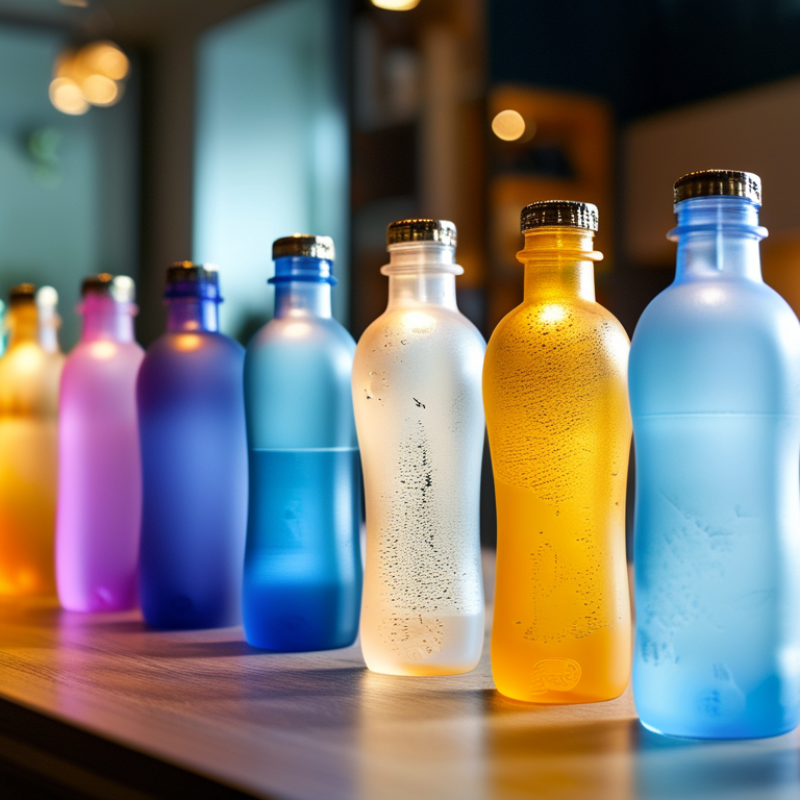
Frosted plastic bottles are containers with a soft, translucent surface rather than a fully transparent finish. Their appearance comes from molded texture, surface treatment, or additives that scatter light. This creates a smooth, cloudy effect. The bottle still feels lightweight and durable, but its contents look less exposed. Frosting can also reduce the visibility of fingerprints, minor scratches, and uneven filling. According to the OECD Global Plastics Outlook, packaging represented about 40% of global plastic use in 2019. Small design decisions therefore affect a very large material stream.
Clear bottles show color, texture, and fill level more accurately. Frosted bottles offer a quieter, more tactile appearance and can provide limited visual privacy. However, they are not automatically better. Some surface coatings may complicate recycling, while molded-in textures can reduce that concern. PlasticsEurope’s Plastics—the Fast Facts 2024 reported global plastic production of approximately 413.8 million tonnes in 2023. Material compatibility matters. A beautiful finish should not weaken recovery performance.
Tips: Ask for resin identification, recycled-content details, and recycling guidance before approving samples. Compare a coated bottle with a molded-frosted sample. Test both under warehouse lighting, after handling, and after filling. Do not judge only by appearance. The ideal finish may be less perfect, but more practical.
| Evaluation Dimension | Frosted Plastic Bottles | Clear Plastic Bottles | Practical Implication |
|---|---|---|---|
| Definition | Plastic bottles with a deliberately matte, translucent, or satin-like surface that diffuses light. | Plastic bottles with a smooth, transparent surface that allows the contents to be seen clearly. | The main difference is optical appearance and light transmission, not necessarily the base plastic material. |
| Light transmission | Scatters and reduces direct light transmission, depending on the finish and wall thickness. | Allows more direct light to pass through the container. | Frosting can provide partial light management, but it is not automatically a complete light barrier. |
| Protection from light-sensitive contents | May offer more protection than a clear bottle by reducing direct exposure, although effectiveness varies. | Provides limited protection unless the plastic itself contains light-blocking additives or an external coating is used. | For strongly light-sensitive formulas, opacity, color, testing, or additional packaging may still be required. |
| Privacy of contents | Partially conceals the color, fill level, and appearance of the contents. | Clearly displays the color, texture, sediment, and remaining quantity. | Frosted packaging is useful when a more discreet or premium presentation is preferred. |
| Surface appearance | Soft, muted, and low-glare appearance with a smooth or slightly textured visual effect. | Glossy, bright, and highly transparent appearance. | The preferred finish depends on whether the design goal is understated elegance or maximum product visibility. |
| Handling and grip | The matte surface may feel less slippery than a highly polished surface, but grip depends on the exact texture and bottle shape. | The smooth surface may feel more slippery when wet, depending on the material and design. | Surface finish can influence perceived handling, but it should not replace ergonomic bottle design. |
| Scratch visibility | Minor scuffs may be less visually obvious because the surface already diffuses reflected light. | Scratches, fingerprints, and surface marks may be easier to notice on the glossy finish. | Frosting can help maintain a consistent appearance during handling and transport. |
| Product visibility | Offers limited visibility, making it harder to inspect the exact color or remaining volume. | Makes the product easy to inspect before purchase and during use. | Clear bottles are often better when visual inspection is part of the user experience. |
| Decoration and labeling | Creates contrast with glossy labels, metallic details, printed graphics, and simple typography. | Shows the container and contents clearly, allowing labels and liquid color to work together visually. | The choice should match the intended packaging hierarchy and decoration method. |
| Perceived quality | Often communicates a refined, soft-touch, or premium visual impression. | Often communicates cleanliness, simplicity, transparency, and functional visibility. | Perceived quality is subjective and is influenced by shape, closure, label, color, and finish together. |
| Recyclability considerations | Recyclability depends on the resin, additives, coatings, pigments, labels, and local sorting rules. | Clear, unpigmented packaging is commonly easier for recycling systems to identify and process, but local rules vary. | Confirm the complete package design with local recycling requirements rather than judging by appearance alone. |
| Best use case | When light diffusion, privacy, reduced glare, tactile appeal, or a muted appearance is important. | When contents visibility, fill-level monitoring, color presentation, or straightforward inspection is important. | Select the finish according to the product’s light sensitivity, user expectations, decoration needs, and end-of-life requirements. |
Note: Frosting affects light diffusion and appearance, but the actual protection, durability, and recyclability of a bottle depend on its material, manufacturing process, additives, wall thickness, and local recycling infrastructure.
It has a soft, cloudy surface that scatters light. The contents look less exposed. The bottle remains lightweight and durable.
Clear plastic shows color, texture, scratches, and fill levels clearly. Frosted plastic reduces glare and hides fingerprints. It creates a quieter, more tactile appearance.
They can reduce direct light reaching liquids, creams, or powders. This may slow fading, oxidation, or separation. It is not magic. Protection depends on the material and package design.
No. Frosting alone does not guarantee ultraviolet protection. Some plastic walls still transmit ultraviolet wavelengths. Test the finished bottle under controlled light.
Compare clear and frosted samples under bright shelf lighting. Check color, strength, degradation, and fill appearance. Test filled bottles, not empty samples only.
Sometimes. Recycling depends on the plastic type, finish, color, closure, and local sorting equipment. Molded-in texture may be simpler than an added coating. Ask for resin and recycling details before approval.
It hides minor scratches, fingerprints, and uneven filling. Handling may feel better under bright retail lights. The product also appears less exposed.
Customers may inspect the product less easily. Contamination can become harder to notice. Some finishes may complicate recycling. A beautiful surface is not always the wiser choice.
Choose clear plastic when color, texture, or fill level needs frequent inspection. It suits products requiring obvious visual monitoring. The best choice depends on evidence, not appearance alone.
Why use frosted plastic bottles instead of clear ones? Frosted plastic bottles are containers with a softly textured, semi-opaque surface that scatters light rather than allowing it to pass through directly. This finish can help reduce exposure to light-sensitive contents, making it useful for products that may lose quality, color, or stability when exposed to strong illumination. Compared with clear plastic, frosted plastic also offers a more understated appearance and can make minor scuffs, fingerprints, and surface marks less noticeable.
Beyond appearance, the textured surface may improve grip during handling, especially when the bottle is wet or used frequently. Frosted bottles can also create a sense of privacy by partially concealing the contents. However, clear bottles remain a better choice when product visibility is important, such as when customers need to check the color, amount, or condition of the contents. The best option depends on the product’s light sensitivity, presentation goals, handling requirements, and the importance of transparency.

 Vikas Plastic